
There’s this thing that happens at Indian family gatherings. Someone’s child walks in wearing a new outfit, looking genuinely lovely, and the aunty in the corner says — with complete sincerity — *”Thoda mota ho gaya hai, no? But the kurta suits you.”*
And there it is. The compliment with a small knife in it.
We are a nation of people who will travel six hours for a wedding, cook for forty, and cry at the airport like it’s a cinema scene — and yet, telling someone plainly that they did something wonderful feels oddly dangerous. Like the compliment itself might somehow jinx it, or worse, give the person an inflated sense of themselves.
But I’ve been thinking about the ordinary people in our ordinary lives. Not celebrities. Not bosses. Not the person you’re trying to impress at a networking event. The *real* ones.
The vegetable vendor who remembers that you never have change handy. The colleague who helped you explain better in client call in your presentation. The neighbour aunty who left a dabba outside your door when you were sick, without knocking, without needing to be thanked. The security guard who says *”Good morning, didi”* every single day with the same warmth, regardless of whether you say it back.
These people move through our lives doing small, decent things. And we say nothing.
Here’s what I’ve noticed: we’re not emotionally unavailable people. We’re actually very feeling. We cry at *Dil Chahta Hai* even though we’ve watched it twelve times. We feel genuine pride when a junior colleague succeeds. We notice when someone’s been working harder than everyone else. We feel it.
We just don’t *say* it.
Maybe it’s how we grew up — appreciation in most Indian households came wrapped in expectation. *”Topper aaya hai, toh seedha 95% kyun nahin?”* Praise was rationed, like it might make you complacent. So as adults, we learned to swallow it.
But consider this: what does a compliment actually cost? A few seconds. A little vulnerability — yours, not theirs. And what does it give? Sometimes, genuinely, it can be the sentence someone carries with them for years. The one they remember on a bad day. The one that told them: *you are seen.*
We don’t need grand gestures. We just need to say the thing we’re already thinking.
Tell the office peon who always brings your chai exactly right that you’ve noticed it, and that it’s never once been wrong. Tell your building’s chowkidar that his work matters. Tell your mother that the dal she makes is the taste of home for you, not as a passing comment, but as a full, deliberate sentence. Tell a friend who gave you good advice last year that it changed something for you.
Tell your autorickshaw driver, who navigated traffic for forty minutes without losing his cool, that it was a calm, good ride.
These things matter. They aren’t small.
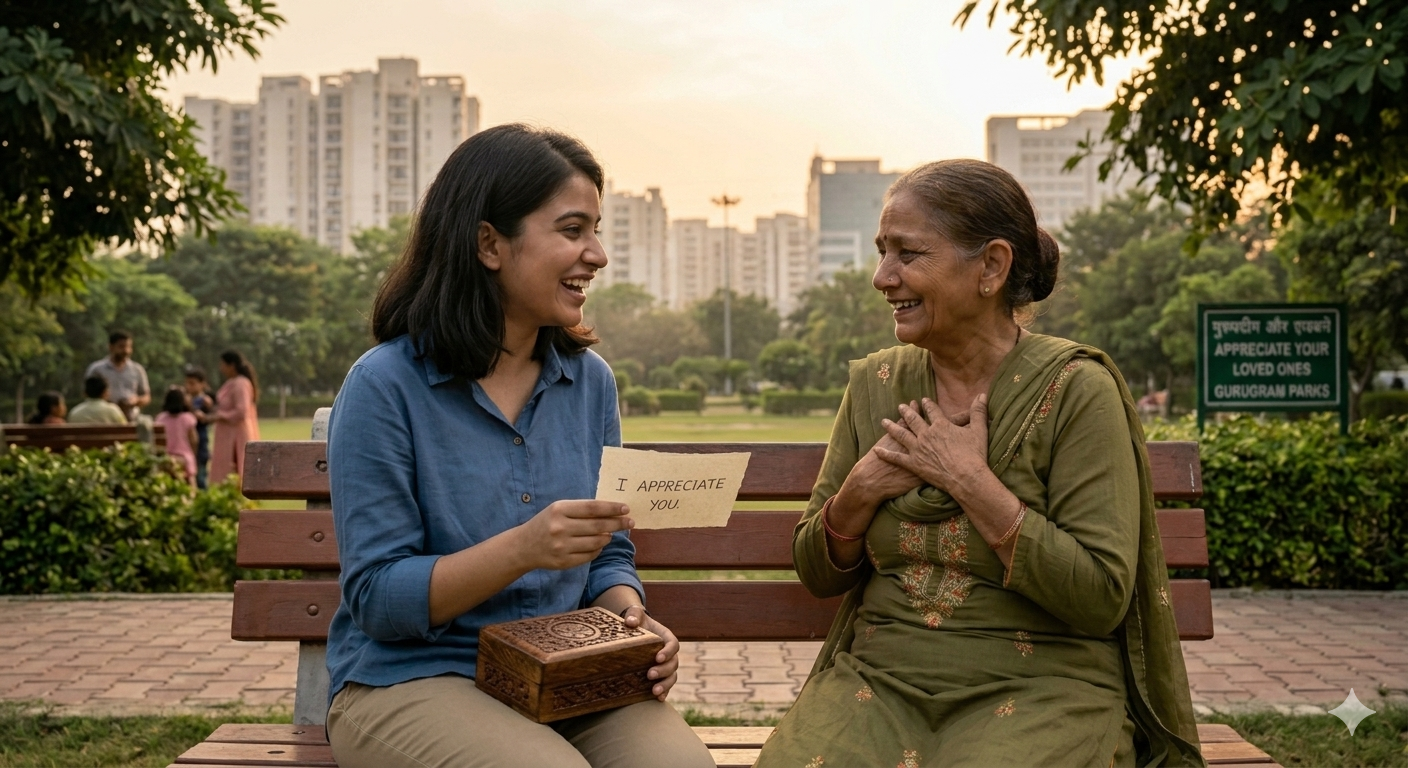
There’s a beautiful Urdu word — *qadr* — that means to recognise someone’s worth. To truly see their value. We use it in phrases like *qadr karna*, to appreciate, to honour. It’s a deeper word than “compliment.” It implies that you have looked at someone and understood what they bring.
That’s what I’m talking about. Not flattery. Not the *”wah wah”* we hand out like prasad. But the real kind — specific, true, unhurried.
*”The way you handled that situation was really mature. I wouldn’t have managed it like that.”*
*”You’ve been holding this team together. I see it, even if it doesn’t always get said.”*
*”That thing you wrote touched me. I kept thinking about it.”*
India is a high-context culture, they say. We communicate a lot in silences, in gestures, in what isn’t spoken. And there’s beauty in that. But sometimes — not always, just sometimes — the thing needs to be spoken. The person in front of you deserves to hear it, clearly, without the knife inside.
So the next time you think something kind about someone, consider saying it. Not loudly, not with fanfare. Just honestly. In whatever language feels natural — Hindi, English, the mixed-up Hinglish of our daily lives.
Just say it.
*Qadr karo. Aur batao bhi.*
Value them. And let them know.






Leave a Reply