
on questions, silence, and the ₹100 per minute that follows
Some days are not bad.
They are just… slightly off.
Like a conversation that ends too early,
or tea that isn‘t hot enough.
Nothing is wrong.
But nothing feels entirely right either.
The middle class does not have anxiety. It has EMIs. It has school admissions and gas cylinder bookings and the perpetual question of whether the price of onions will come down before the end of the month. It is too busy for feelings to gather and make themselves known.
Then something shifted. Not dramatically. Just a slow crossing of some invisible threshold. The building got a lift. The coffee became filter. The words anxiety and depression, which had always belonged to other people, began showing up at the door without calling ahead.
Good or bad, time will tell.
Time, as it turns out, is not great at telling.
It mostly just passes.
- * *
The Appointment
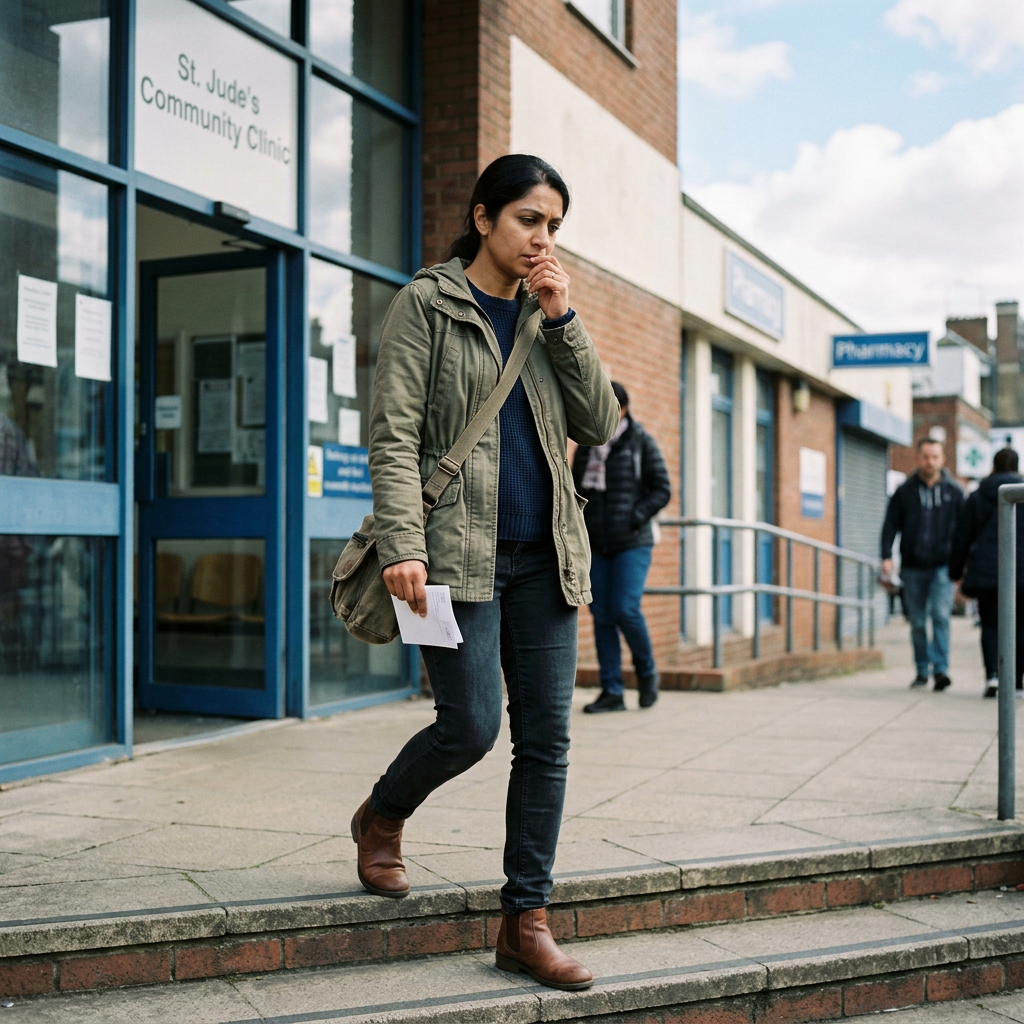
The clinic was in Andheri West. Fourth floor. Sandalwood diffuser. Chairs in a colour that could only be described as deliberately calming. On the low table, Reader’s Digests from three years ago — as though the waiting room existed slightly outside of regular time.
She had made the appointment herself. Paid an advance. Set three alarms. She had also decided, somewhere between booking and arriving, that she would not take whatever was prescribed. This was a research visit. She was here to gather information and leave, the way one attends a timeshare presentation with no intention of buying.
She had been here before.
Not as a patient — as a chaperone.
Her husband. Her brother-in-law.
Most recently, her friend Sunita,
who had been walking around under a cloud
for six months straight.
**Dr. Mehra **“I think I‘ve seen you before.“
She considered explaining. The husband, the brother-in-law, Sunita. Instead she said: yes, I suppose you have.
- * *
The Questions
There are questions that seem safe until you start answering them.
Childhood — fine. Marriage — fine. Career — fine. She answered like a well-prepared student, moving through each category with the fluency of someone who has had these facts organised for a long time. Then Dr. Mehra asked about friends.
There was a pause. Not dramatic. The small kind — looking for something in a drawer and realising it isn’t there and hasn’t been for some time.
**Her **“I don‘t have any. Friends, I mean. Acquaintances, yes. People whose names I know in a lift. But friends — the kind you call when something is wrong — no.“
Dr. Mehra wrote something. The pen moved with the quiet satisfaction of someone who has found what they were looking for.
**Dr. Mehra **“And your in-laws?“
**Her **“Hi-bye. Managed distance. Civil at weddings, invisible the rest of the year. By mutual agreement — theirs and mine.“
She thought she was explaining herself.
She didn‘t realise she was also explaining everything.
- * *
The Hobbies
I have hobbies.
I read.
I write.
I watch shows.
I shop.
It sounds like a full life.
Until I realise they are all ways of passing time,
not living it.
She listed hers with the confidence of a woman who has been asked her best subject. Reading novels. Writing. K-Dramas — and she did not apologise for K-Dramas. Shopping with the focused commitment of a woman who has turned retail into a form of self-expression.
Dr. Mehra did not look too happy about the infinite hobbies. There was a particular expression on her face — the expression of a person who arrived expecting emptiness and found a very cluttered room. She had, apparently, struggled considerably with a husband and brother-in-law who both wrote ‘eating’ and ‘sleeping’ when asked to list what they enjoyed. Not hobbies. Necessities.
- * *
The Prescription
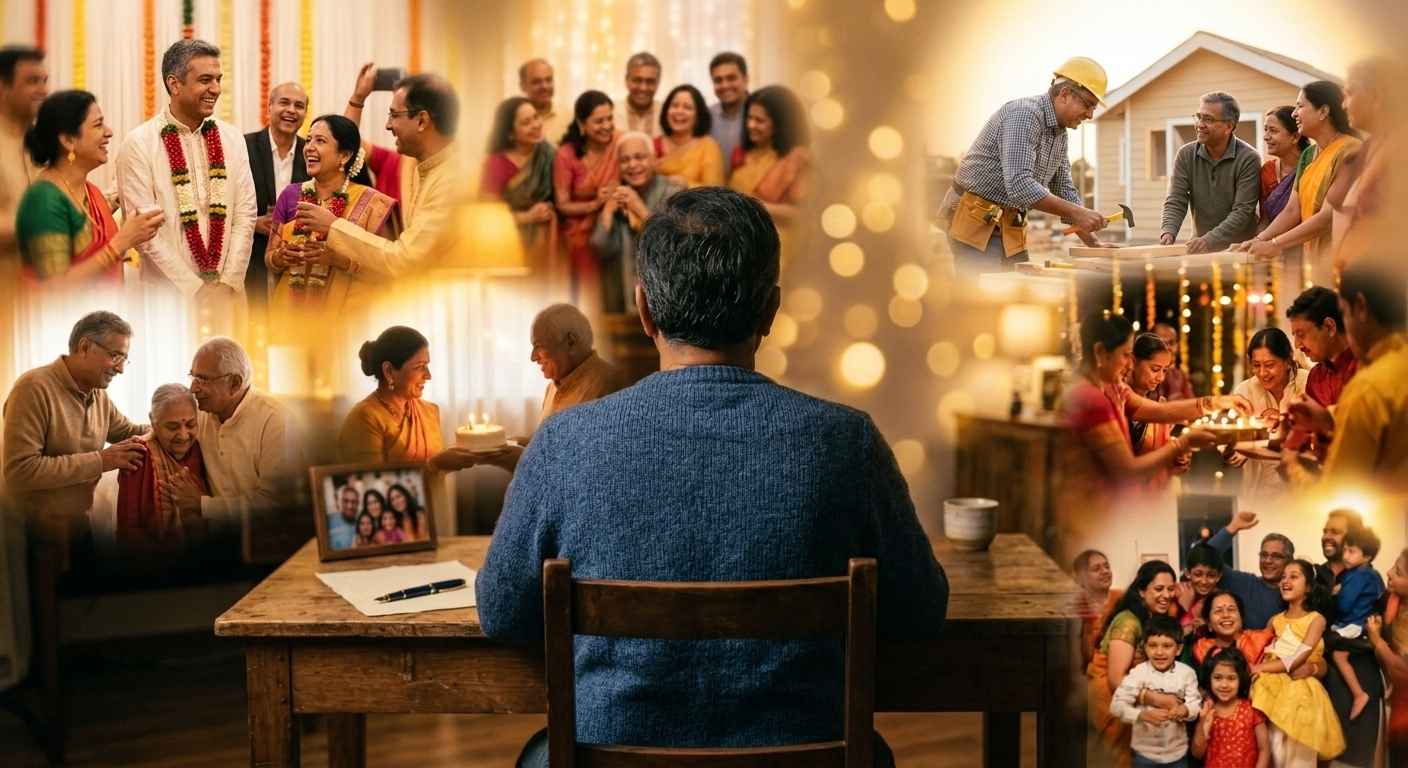
The hobbies, Dr. Mehra said, were distractions. She needed social interaction. Reconcile with friends who had caused FOMO and anxiety. Reconcile with the in-laws.
**Her **“The in-laws who made deliberate, architecturally impressive attempts to stay away. Who are, without question, my single greatest source of tension for more than twenty years.“
**Dr. Mehra **“Yes.“
The thirty minutes were nearly over. She could feel the ₹100-per-minute zone approaching, like a taxi meter crossing a city limit.
I thought clarity would feel like confidence.
It doesn‘t.
It feels quieter than that.
Almost like acceptance.
She took the prescription. Folded it. Put it in her bag next to a receipt from a bookshop in Juhu where she had bought two novels that morning, neither of which she strictly needed.
She walked out into the Andheri afternoon — the autorickshaws, the chai tapri, a man arguing on his phone about something that would clearly resolve on its own — and thought: everything is, on balance, okay. Not fixed. Not reconciled. But okay.
She did not fill the prescription.
This will surprise no one.



Leave a Reply